
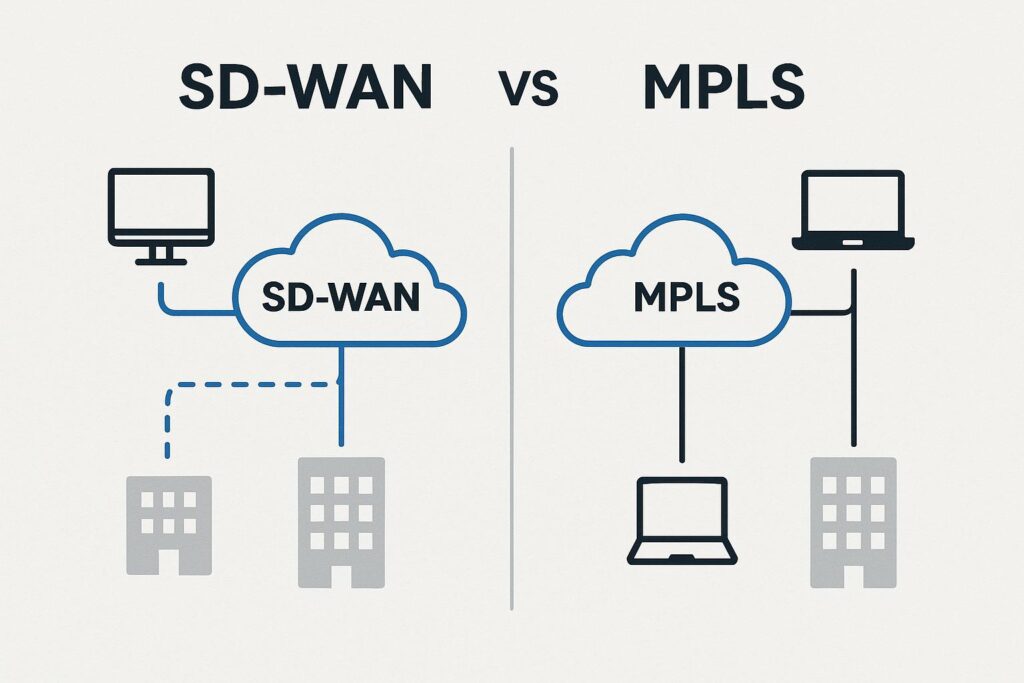
SD-WAN vs MPLS: What’s the Difference?
Choosing the right network connectivity option is a common challenge for modern businesses, especially as AI tools and cloud-based productivity platforms become mission-critical. Whether you’re scaling your SaaS infrastructure or optimizing workflows, selecting between SD-WAN vs MPLS can impact your costs, agility, and long-term performance. Let’s break down the differences so you can make a smarter, data-driven decision.
SD-WAN vs MPLS: The Fundamentals
| Feature | SD-WAN | MPLS |
|---|---|---|
| Cost | Lower, uses public internet and multiple links | Higher, relies on dedicated circuits |
| Flexibility | Highly dynamic, easy to scale and manage | Static, harder to expand or reconfigure |
| Performance | Optimizes traffic using AI and automation | Consistent, but less adaptable to changing needs |
| Control | Centralized dashboard, real-time visibility | Requires carrier support for changes |
Strategic Insights: How to Choose for AI-Driven Productivity
- Agility for AI: SD-WAN’s cloud-native design allows teams to deploy and manage AI-powered tools from anywhere, supporting remote and hybrid workforces.
- Cost Management: If you’re running multiple SaaS applications across offices, SD-WAN offers cost efficiency by routing traffic intelligently and using commodity internet links.
- Performance Optimization: MPLS provides guaranteed performance for latency-sensitive workloads, but SD-WAN can prioritize mission-critical AI traffic on-demand.
Framework: Decision Checklist
- Do you need real-time control over your network?
- Is predictable performance for specific apps (like VoIP or AI inference) your top priority?
- Are you planning to scale locations or support remote users?
- What is your budget for connectivity and maintenance?
For most SaaS businesses and AI-driven teams, SD-WAN provides the flexibility and efficiency needed for rapid growth. However, industries with strict compliance or ultra-low latency needs may still benefit from MPLS for certain connections. For a deeper dive into optimizing your tech stack, check out our AI Productivity Frameworks or our Managed IT Services.
FAQ: SD-WAN vs MPLS
What is the main difference between SD-WAN and MPLS?
SD-WAN leverages public internet and multiple connection types to create a virtualized network, offering flexibility and centralized management. MPLS uses private, dedicated circuits for consistent but less adaptable connectivity.
Is SD-WAN more secure than MPLS?
SD-WAN includes integrated encryption, segmentation, and security features. MPLS is inherently private but may require extra layers for advanced security. Read more from Gartner.
How does SD-WAN impact cloud productivity tools?
SD-WAN optimizes connections to cloud applications, reducing latency and improving user experience—essential for AI tools and remote work.
Can I combine SD-WAN and MPLS?
Yes, a hybrid approach is common. SD-WAN can overlay existing MPLS circuits, offering both performance and agility during digital transformation.
What are the ongoing costs of SD-WAN vs MPLS?
SD-WAN typically incurs lower operational expenses due to its use of public internet and simplified management, while MPLS has higher recurring costs from dedicated lines and carrier support.
Next Steps: Upgrade Your Network Strategy
As you evaluate SD-WAN vs MPLS for your next phase of growth, remember that your network is the backbone of AI-powered productivity. If you’d like tailored guidance or want to see how Omni Legion can help you future-proof your connectivity, connect with our team or explore our latest insights.