
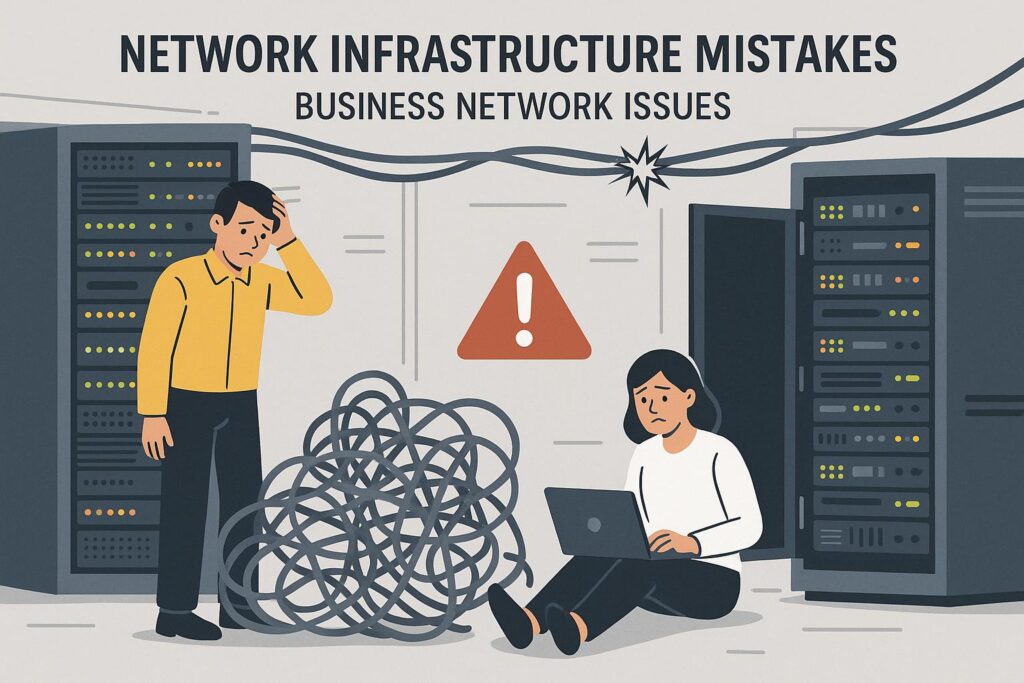
Common Network Infrastructure Mistakes That Hurt Business Performance
Every modern business relies on a robust network. But even the brightest teams can stumble over avoidable network infrastructure mistakes. In a world powered by AI, cloud apps, and high-speed collaboration, a sluggish or unreliable network isn’t just an IT headache—it’s a productivity killer that stifles innovation, frustrates employees, and limits growth.
At Omni Legion, we see firsthand how smart prompt engineering and streamlined workflows can be undermined by foundational business network issues. Let’s break down the most common pitfalls, and how you can sidestep them to unlock your team’s full potential.
Top Network Infrastructure Mistakes (and How to Avoid Them)
-
1. Underestimating Network Capacity Needs
Many businesses design networks based on current needs, not future growth. This leads to bottlenecks, slow file transfers, and laggy cloud apps as your team (and data) scales.- Regularly assess bandwidth usage with network monitoring tools.
- Plan for at least 30% overhead to accommodate growth and spikes.
-
2. Poor Segmentation and Security
Flat networks make it easy for threats to spread and harder to manage traffic. Without proper segmentation (like VLANs), you risk widespread downtime from a single incident.- Segment by department or function to contain issues and boost performance.
- Apply the principle of least privilege to all network access.
-
3. Ignoring Redundancy and Disaster Recovery
A single point of failure can bring operations to a halt. Yet many SMBs lack backup links or failover strategies.- Implement redundant connections for critical systems.
- Test recovery plans quarterly to ensure business continuity.
-
4. Outdated Hardware and Firmware
Old routers and switches (or unpatched firmware) can’t keep up with today’s AI workloads—and may expose you to security vulnerabilities.- Set a regular replacement schedule for network hardware.
- Enable automatic firmware updates where possible.
-
5. Neglecting Documentation and Change Management
Fast-moving teams often skip documenting network changes, leading to confusion, downtime, and misconfigurations.- Use templates and checklists to capture every change.
- Store docs in a central, easily accessible location.
Framework: Proactive Network Health Checklist
- Is your bandwidth usage within safe limits?
- Are key systems protected by redundant paths?
- Have all devices been updated in the last 30 days?
- Is your network segmented by risk and function?
- Are all changes documented and reviewed?
For more on scalable setups, see our AI productivity resources.
FAQ: Network Infrastructure Mistakes & Business Network Issues
- What are the top signs of network infrastructure mistakes?
- Frequent downtime, slow application response, unexplained outages, and security breaches all point to underlying network design or management issues.
- How can poor network infrastructure impact AI and productivity tools?
- AI and cloud tools require stable, high-bandwidth connections. Network slowdowns can cause prompt delays, data syncing errors, and workflow interruptions.
- What’s the best way to future-proof my business network?
- Regular capacity planning, hardware refresh cycles, and adopting scalable architectures help ensure your network can handle future demands.
- Why is network segmentation important?
- Segmentation isolates issues, improves security, and prioritizes critical traffic, reducing the risk of widespread business disruption.
- How often should network documentation be updated?
- Update documentation with every significant change—ideally after each upgrade, migration, or new policy rollout.
- Where can I learn more about optimizing my business tech stack?
- Explore Omni Legion’s blog for best practices and productivity frameworks tailored to modern teams.
Next Steps: Build a Future-Ready Network
Avoiding these network infrastructure mistakes isn’t just about preventing downtime—it’s about empowering your people and AI systems to do their best work. If you’re ready to optimize your network for speed, reliability, and growth, connect with Omni Legion for a tailored assessment or browse our latest AI productivity insights.
For further reading, see Cisco’s guide to enterprise networking or the NIST guide to network architecture.