
6 Questions to Ask Before Hiring a Network Engineer
Hiring the right network engineer can make or break your business’s IT infrastructure. For many small and mid-sized businesses (SMBs), network issues mean lost productivity, security risks, and mounting operational costs. Whether augmenting your in-house team or partnering with a managed services provider, knowing the right questions before hiring a network engineer is critical to reduce risk and ensure long-term IT success.
Why Your Network Engineer Choice Matters
Your network is the backbone of your operations, impacting everything from business continuity to customer experience. A misstep in hiring can lead to outages, data breaches, and compliance headaches. As an IT consulting and staffing firm, Omni Legion recommends these six essential vetting questions to guide your selection process.
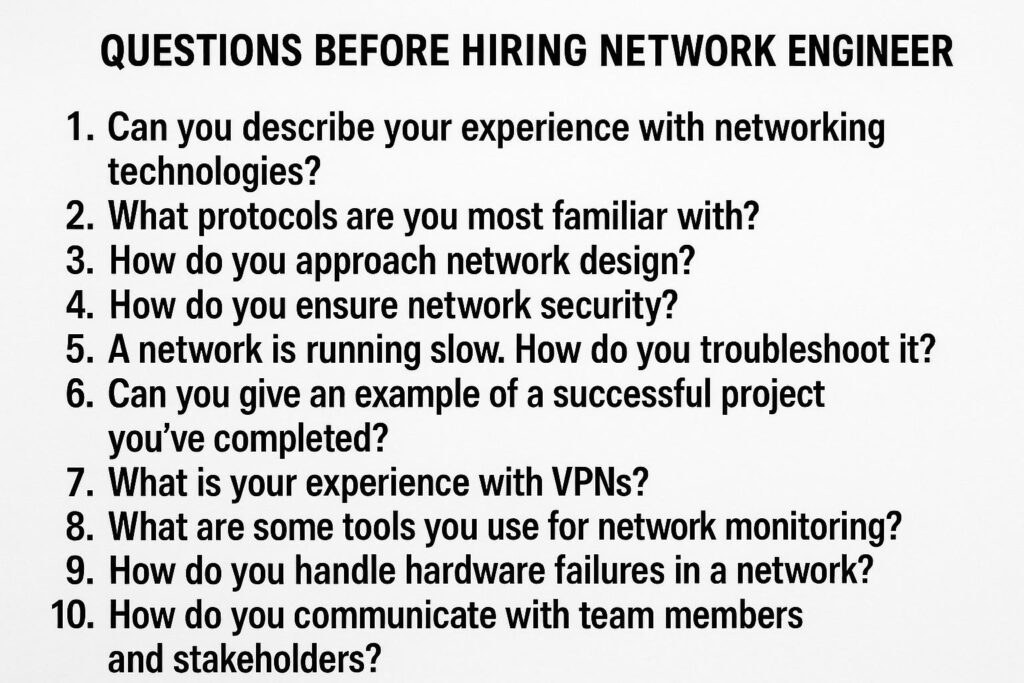
6 Key Questions Before Hiring a Network Engineer
-
What experience do you have with environments similar to ours?
- Ask for specific examples: healthcare, finance, or distributed offices each have unique requirements.
- Look for familiarity with your core platforms (e.g., Cisco, Juniper, cloud environments).
-
How do you approach network security and compliance?
- Probe for experience with standards like NIST or HIPAA if relevant.
- Ask about proactive monitoring, patching, and incident response protocols.
-
Can you provide recent examples of solving complex network issues?
- Request case studies or real-world scenarios demonstrating problem-solving skills.
- Listen for clear communication and collaboration with non-technical stakeholders.
-
What is your process for documenting network architecture and changes?
- Effective documentation is essential for ongoing support and risk reduction.
- Ask to see sample diagrams or documentation from past projects (with sensitive info redacted).
-
How do you stay current with evolving technologies and threats?
- Look for ongoing training, certifications, or participation in industry groups.
- Technology changes rapidly—ensure your candidate keeps up.
-
What is your approach to scalability and future-proofing?
- Can they design solutions that grow with your business?
- Ask how they plan for cloud adoption, remote work, or business expansion.
Framework for Evaluating Candidates and Vendors
- Request technical assessments or project simulations.
- Check references, focusing on similar business types and network complexity.
- Include clear requirements in your RFP or job description—see Omni Legion’s Technology Advisory Services for help scoping your needs.
- Evaluate communication skills, not just technical expertise.
For more on building resilient IT operations, see our Managed IT Services page.
FAQ: Hiring a Network Engineer
- What certifications should a network engineer have?
- Look for certifications like Cisco CCNA/CCNP, CompTIA Network+, or vendor-specific cloud credentials. These signal up-to-date technical skills and commitment to best practices.
- How do I assess a network engineer’s problem-solving ability?
- Ask for detailed stories about past incidents and request a technical assessment. Real-world troubleshooting examples are more telling than resumes.
- What’s the difference between a network engineer and a network administrator?
- Engineers design and build networks; administrators handle day-to-day management. For project work or upgrades, you’ll want engineering expertise.
- How can I ensure ongoing reliability after hiring?
- Require documentation, schedule regular reviews, and consider managed services partnerships for continuous support. Reference frameworks from organizations like SANS.
- Should I hire a full-time engineer or use a managed IT provider?
- It depends on your size, complexity, and growth plans. Many SMBs benefit from a hybrid approach. Omni Legion can help you evaluate the best model for your needs.
Ready for Expert Network Guidance?
If you want confidence in your next network engineering hire—or need help scoping your IT project—contact Omni Legion for trusted technology advisory. We help SMBs minimize risk, control costs, and build scalable IT infrastructure. No hard sell—just clear, actionable advice tailored to your business.