
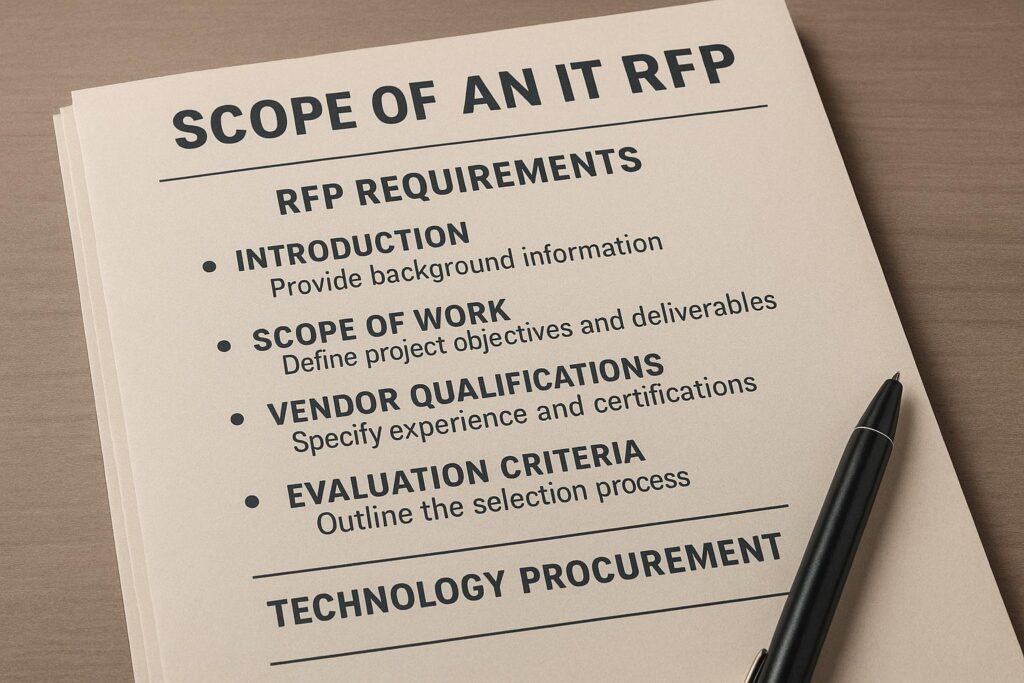
How to Scope an IT RFP the Right Way
Ever felt overwhelmed by the endless vendor proposals that miss the mark? In the age of AI and rapid digital transformation, scoping an IT RFP (Request for Proposal) can make or break your technology procurement process. Vague requirements invite confusion, wasted time, and the wrong vendors. A well-defined RFP helps you attract partners who truly fit your needs—saving you effort and accelerating your projects.
Why Scoping Your IT RFP Matters
Whether you’re sourcing a new SaaS platform, modernizing legacy systems, or implementing AI, the way you define your RFP requirements will shape your project’s success. Clear scoping ensures:
- Vendors understand your business objectives and technical needs
- You avoid inflated costs and missed deadlines
- Stakeholders are aligned from day one
At Omni Legion, we help clients streamline RFPs for technology procurement, using proven frameworks and prompt engineering best practices.
Framework: Scoping an IT RFP the Smart Way
Ready to scope your next IT RFP? Follow this step-by-step approach:
-
Define the Business Problem
Start with a clear statement of what you want to solve or improve. For example: “Reduce manual data entry by automating invoice processing.” -
List Functional & Technical Requirements
– Prioritize must-have and nice-to-have features
– Specify integration points (e.g., with existing CRM or ERP)
– Outline security, compliance, and scalability needs -
Clarify Evaluation Criteria
Let vendors know how you’ll score proposals (e.g., cost, timeline, support, innovation). This filters out mismatched bids early. -
Include Context & Constraints
Share relevant background: project timelines, budget ranges, stakeholder roles, or previous solutions tried. -
Encourage Thoughtful Responses
Ask open-ended questions in your RFP, such as “Describe your approach to ongoing support and AI integration.”
Need a sample requirements table? Here’s a quick template to get started:
| Category | Requirement | Priority |
|---|---|---|
| Integration | Connects to Salesforce CRM | Must-have |
| Security | Supports SSO & SOC 2 compliance | Must-have |
| AI Capability | Automated data extraction | Nice-to-have |
Make Prompt Engineering Work for You
Writing clear RFP requirements is a lot like crafting effective AI prompts. Both require specificity, context, and clear expectations. Consider using AI tools to draft, review, or refine your RFP language—just as you would with prompt engineering. This can help you spot ambiguities and ensure clarity.
For more productivity and AI tips, explore our insights hub.
FAQ: Scoping IT RFPs
What is the best way to scope an IT RFP?
Start by defining your business goals, breaking down your requirements into clear categories, and providing context about your current environment. Use a table or checklist to keep requirements organized and prioritize them.
How detailed should my RFP requirements be?
Be as detailed as possible without overwhelming vendors. Include must-haves, nice-to-haves, integration points, and evaluation criteria. Clarity attracts the right vendors and ensures accurate proposals.
How can prompt engineering improve my RFP process?
Prompt engineering teaches you to be specific, contextual, and unambiguous—skills that translate directly to writing better RFPs. Clear prompts yield better AI results, just as clear RFPs yield better vendor responses.
What mistakes should I avoid in technology procurement RFPs?
Avoid being vague, omitting evaluation criteria, or ignoring stakeholder input. Don’t skip security or integration requirements, and always clarify your timeline and budget.
Where can I learn more about optimizing tech procurement?
Check out resources like CIO.com and our AI workflow consulting page for deeper guidance.
Ready to Level Up Your Next IT RFP?
Clear, strategic RFP scoping unlocks better results for any technology procurement project. If you’d like expert support in defining requirements, evaluating vendors, or leveraging AI for productivity, explore Omni Legion’s services—and let’s make your next project a success.