

Introduction: Why Infrastructure Overhauls Feel Overwhelming
Many IT leaders know their infrastructure is overdue for modernization—whether due to aging hardware, technical debt, legacy network design, or rising cybersecurity risks. But the biggest challenge isn’t the overhaul itself. It’s knowing where to start.
A successful infrastructure overhaul requires structured planning, cross-team alignment, and strong execution. Below is a practical framework used by organizations preparing for IT modernization and network reconstruction.
Step 1: Map Your Current State
Before rebuilding anything, document how your environment works today.
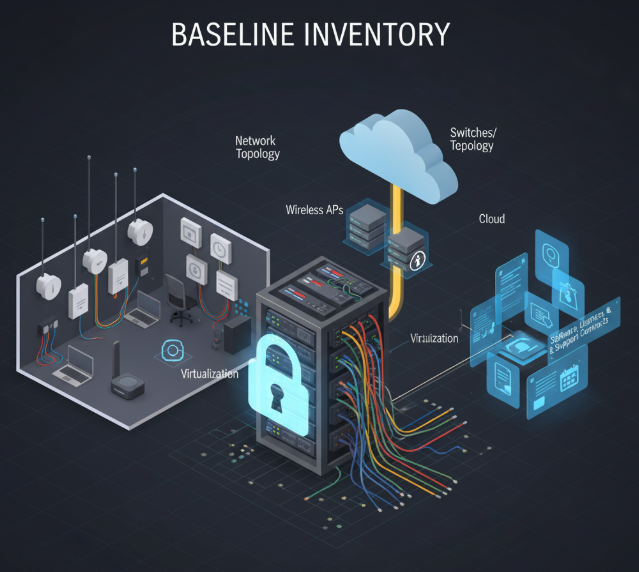
Create a Baseline Inventory
- Network topology diagrams
- Switches, firewalls, wireless infrastructure
- Virtualized environments and cloud integrations
- Software, licenses, and support contracts
Use telemetry tools such as Microsoft’s network monitoring suite or vendor-native analytics to validate traffic patterns and dependencies.
Step 2: Assess Risks and Modernization Drivers
Identify why modernization is necessary.
Common triggers:
- End-of-life hardware
- Rising incident rates or vulnerabilities
- Poor network performance or capacity limits
- Compliance requirements tied to NIST or ISO standards
This step builds alignment with executives and helps prioritize budget.
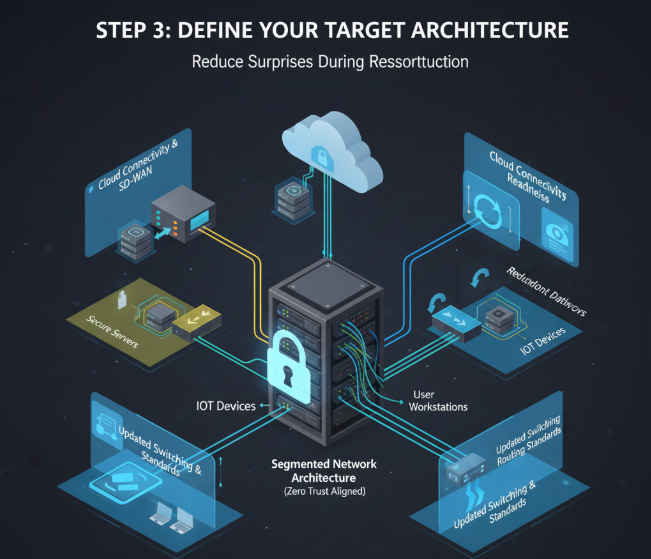
Step 3: Define Your Target Architecture
A strong target design helps reduce surprises during reconstruction.
Include These Elements:
- Segmented network architecture (Zero Trust aligned)
- Redundant pathways and failover strategies
- Updated switching and routing standards
- Cloud connectivity and SD-WAN readiness
- Monitoring and observability requirements
Review industry frameworks from NIST and Gartner to guide architectural decisions.
Step 4: Build a Phased Modernization Plan
Break your overhaul into manageable phases.
Example Phases:
- Stabilization: Resolve critical vulnerabilities and patching gaps.
- Foundation: Deploy new switches, firewalls, and structured cabling.
- Reconstruction: Redesign network segmentation, routing, and access control.
- Optimization: Implement automation, monitoring, and performance tuning.
This approach reduces downtime and limits operational disruption.
Step 5: Prepare Your Team (or Augment It)
Large-scale infrastructure projects often require specialized skill sets.
Whether you need cloud engineers, network architects, or deployment support, consider building a blended team that combines internal staff and contract-based specialists.
Explore OmniLegion’s IT engineering talent network for skilled infrastructure and network engineers: https://omnilegion.com/apply-as-an-engineer/
Step 6: Test, Validate, and Document
Before full cutover, run controlled testing:
- Failover simulations
- Load and performance tests
- Security validation against NIST controls
- Configuration reviews and peer validation
Document everything so the environment is easy to operate after go-live.
Real-World Insight
Companies that engage OmniLegion for overhaul planning often reduce project risk by aligning modernization with workforce, cybersecurity, and vendor decisions. See examples in our IT transformation case studies: https://omnilegion.com/case-studies.
FAQs
How long does an infrastructure overhaul take?
Most projects take 3–12 months depending on the complexity of the network reconstruction.
What triggers the need for IT modernization?
Aging hardware, security gaps, performance issues, and cloud migration often drive the need for an overhaul.
How do I reduce risk during modernization?
Use phased planning, maintain rollback paths, and conduct thorough testing before cutover.
Do I need external experts for an overhaul?
Often yes—specialized skills in networking, cybersecurity, and cloud architecture ensure smoother execution.
How should I prepare my team?
Upskill internal staff, clarify roles, and supplement with contract-based engineers when needed.
Ready to Modernize Your Infrastructure?
If your organization is planning an infrastructure overhaul or exploring IT modernization prep, OmniLegion can support your strategy, staffing, and execution. Visit https://omnilegion.com/contact-us/ to get expert guidance.