
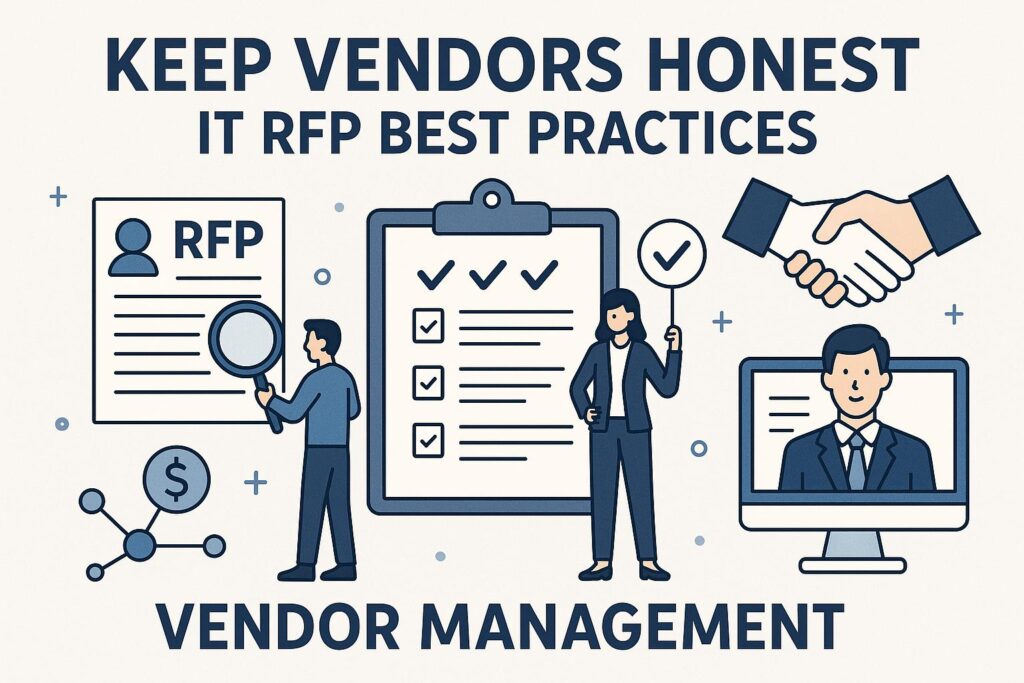
How to Keep Vendors Honest During an IT RFP
Managing an IT RFP (Request for Proposal) can feel a lot like navigating an AI prompt—if you don’t ask the right questions or set the right context, you risk getting incomplete, generic, or overly optimistic responses. In a fast-moving tech landscape, keeping vendors honest is crucial for making informed, confident purchasing decisions. Here’s how you can cut through sales spin and get to the truth, using practical frameworks and prompt engineering techniques.
Why Vendor Honesty Matters in IT RFPs
It’s easy for vendors to present their solutions in the best possible light, especially in competitive RFP processes. But if you want to avoid costly surprises later, you need strategies to keep vendors honest and surface the real story behind the marketing slides. This is where prompt engineering meets vendor management: crafting precise, well-structured RFP questions leads to more transparent, useful answers.
Frameworks and Best Practices to Keep Vendors Honest
- Be Specific with Your Prompts: Don’t just ask, “Can your solution integrate with system X?” Instead, request, “Describe how your solution integrates with system X, including typical implementation steps, required resources, and known limitations.”
- Request Evidence: Ask for actual client case studies, independent references, or sample deliverables. This forces vendors to back up their claims.
- Use Comparative Tables: Require vendors to fill out feature comparison tables, so you can easily spot discrepancies or vague answers.
- Structure for Transparency:
- Ask for ‘Yes/No’ then ‘Explain’: Start with a closed question to anchor the answer, then prompt for details (“Yes, and here’s how…”).
- Probe for Edge Cases: “Describe situations where your solution may not be a fit for our requirements.”
- Encourage Honesty with Incentives: Make it clear that transparency is valued and that honest disclosures will not automatically disqualify a vendor.
Sample Prompt Table for Your IT RFP
| Requirement | Yes/No | Explanation / Evidence |
|---|---|---|
| Integration with Salesforce | Yes | Implemented for 12 clients; REST API used; 2-week average timeline |
| HIPAA Compliance | No | Currently in roadmap; expected Q3 2024 |
For more on strategic vendor management, see our Vendor Management Best Practices and AI Productivity Tools guides.
FAQ: IT RFP Best Practices & Vendor Management
- How do I keep vendors honest in an IT RFP?
- Use specific, structured prompts, ask for evidence, and require comparative answers. This reduces ambiguity and sales spin.
- What are the most common vendor management mistakes during RFPs?
- Relying on vague questions, not requesting supporting documentation, and failing to probe for limitations or exceptions.
- Can AI tools help improve my RFP process?
- Absolutely. AI can help analyze RFP responses for consistency, flag vague answers, and even suggest better prompts. Learn more from HBR.
- What should I do if a vendor’s answer seems too good to be true?
- Ask for specific client references, request a demo, and probe for edge cases or known limitations to validate their claims.
- How can I compare vendor RFP responses more effectively?
- Use structured tables and require vendors to answer in a standardized format. Tools like RFP360 can help automate comparison.
Next Steps: Level Up Your RFP Process
Building a transparent, data-driven RFP process is key to choosing the right IT partner. If you want to go further, explore how Omni Legion’s expertise in prompt engineering and AI-driven productivity can help you get better results—faster. Contact us or check out our latest resources for more actionable insights.