

Introduction: The Hidden Risk in Engineering Hires
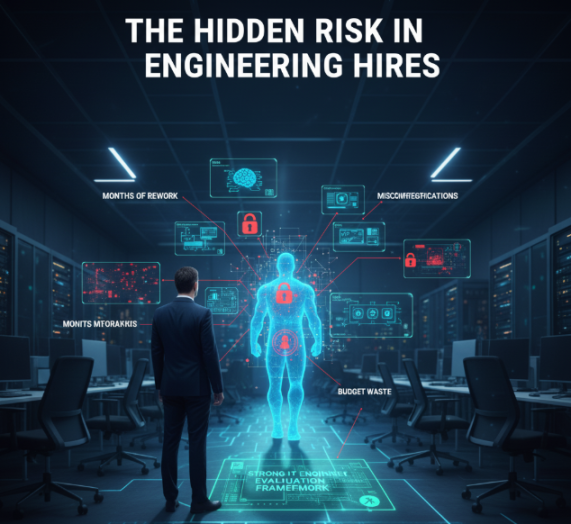
Hiring an IT engineer isn’t just about filling a role—it’s about protecting uptime, accelerating innovation, and reducing cybersecurity risk. Yet many mid-market companies struggle with how to properly evaluate technical talent before hiring. Resumes look impressive. Certifications appear credible. Interviews feel positive. And still, the wrong hire can create months of rework, misconfigurations, and budget waste.
A strong IT engineer evaluation framework ensures you hire people who can truly deliver. This is where structured technical vetting becomes a competitive advantage.
What Makes IT Engineer Evaluation Different?
Engineering roles are high-impact and high-variance. The difference between an average engineer and a top-tier engineer can be millions in avoided downtime, optimized architecture, and more secure systems.
A strong evaluation process must assess:
- Technical depth (skills, experience, certifications)
- Real-world troubleshooting ability
- Architecture and design thinking
- Security awareness across layers
- Communication skills with IT and business teams
- Cultural and operational alignment
A Practical Framework for Technical Vetting
Below is a simple, repeatable evaluation model that CIOs and hiring managers can use.
1. Skills & Role Alignment
Ensure the candidate’s expertise matches the specific engineering domain:
- Network engineering
- Systems engineering
- DevOps / automation
- Cybersecurity
- Cloud architecture
Use descriptive job scopes rather than generic titles. OmniLegion helps companies refine these scopes as part of our IT talent sourcing process.
2. Scenario-Based Technical Assessments
Instead of memorized answers, test how engineers think.
Examples:
- “A site-to-site VPN keeps dropping. Walk me through your troubleshooting steps.”
- “Design a secure wireless environment for 500 users.”
- “What log sources would you review after a suspected credential breach?”
These show real-world capability.
3. Hands-On Lab Testing
Use sandbox environments or lab simulations to validate:
- Configuration accuracy
- Troubleshooting workflows
- Security hygiene
- Documentation habits
Leverage standards like NIST’s cybersecurity framework, Microsoft’s cloud architecture guidelines, or vendor best practices.
4. Behavioral & Soft-Skill Evaluation
Strong engineers must:
- Communicate clearly
- Document consistently
- Collaborate with cross-functional teams
- Manage time and priorities well
Understanding their preferred working style helps prevent mismatch later.
5. Cultural & Operational Fit
Evaluate how well the engineer can adapt to your organization’s:
- Deployment processes
- Change control standards
- Security policies
- Growth pace and ticket volume
Common Pitfalls in Technical Hiring
- Overweighting certifications without validating hands-on skill
- Relying only on conversational interviews
- No testing for security fundamentals
- Hiring for today’s needs instead of future scale
- Limited ability to attract talent due to brand visibility
OmniLegion supports organizations by providing pre-vetted engineers, technical assessments, and hands-on evaluation. Explore the Apply as an Engineer pathway to see how deep our screening process goes: https://omnilegion.com/apply-as-an-engineer/
FAQs
1. What is the best way to evaluate an IT engineer’s technical level?
Use a mix of scenario questions, hands-on labs, and architecture discussions to verify depth, not just surface-level knowledge.
2. Should every IT engineer complete a practical assessment?
Yes. Practical tests reveal thinking style, troubleshooting logic, and security awareness.
3. How long should the technical vetting process take?
Most teams can complete a strong evaluation within 3–5 steps, depending on role complexity.
4. What if we don’t have internal experts to vet engineers?
Partnering with a technical sourcing firm like OmniLegion ensures consistent, high-quality evaluations. Use the Get IT Help page to submit a request: https://omnilegion.com/get-it-help/
5. Is cultural fit really as important as technical skill?
Yes—engineers who communicate poorly or resist standards often introduce risk even if technically strong.
Build a Stronger Engineering Team
Hiring the right IT engineer requires structure, clarity, and deep technical vetting. If you need guidance, access to pre-vetted talent, or help building a repeatable evaluation process, OmniLegion can partner with your team. Explore our case studies to see how we’ve helped organizations strengthen their engineering teams: https://omnilegion.com/case-studies
Or reach out anytime: https://omnilegion.com/contact-us/