
How to Compare IT Vendors Fairly During an RFP
Choosing the right IT vendor can feel overwhelming—especially when every proposal looks great on paper, but the stakes (and budgets) are high. Whether you’re leading a digital transformation or upgrading your SaaS stack, making apples-to-apples comparisons during the IT RFP process is a productivity challenge for even the most seasoned teams. With AI tools and prompt engineering reshaping expectations, it’s more important than ever to ensure your IT RFP evaluation framework is clear, consistent, and fair.
Why a Structured Vendor Scoring Framework Matters
Haphazard vendor selection leads to misaligned partnerships, missed deadlines, and wasted resources. Using a structured vendor scoring system helps you compare IT vendors objectively, reducing bias and surfacing the best fit for your unique needs. This is especially true when requirements include AI, automation, and advanced productivity tools.
Actionable Steps for Effective IT RFP Evaluation
-
Define Your Evaluation Criteria
- Technical capability and scalability
- Security and compliance (especially for AI-powered solutions)
- Integration ease and support
- Pricing transparency
- Vendor reputation and references
-
Weight Each Criterion
Not all criteria matter equally. Assign a percentage or point value to each based on your project’s priorities. For example, security might be 30%, while price is 20%.
-
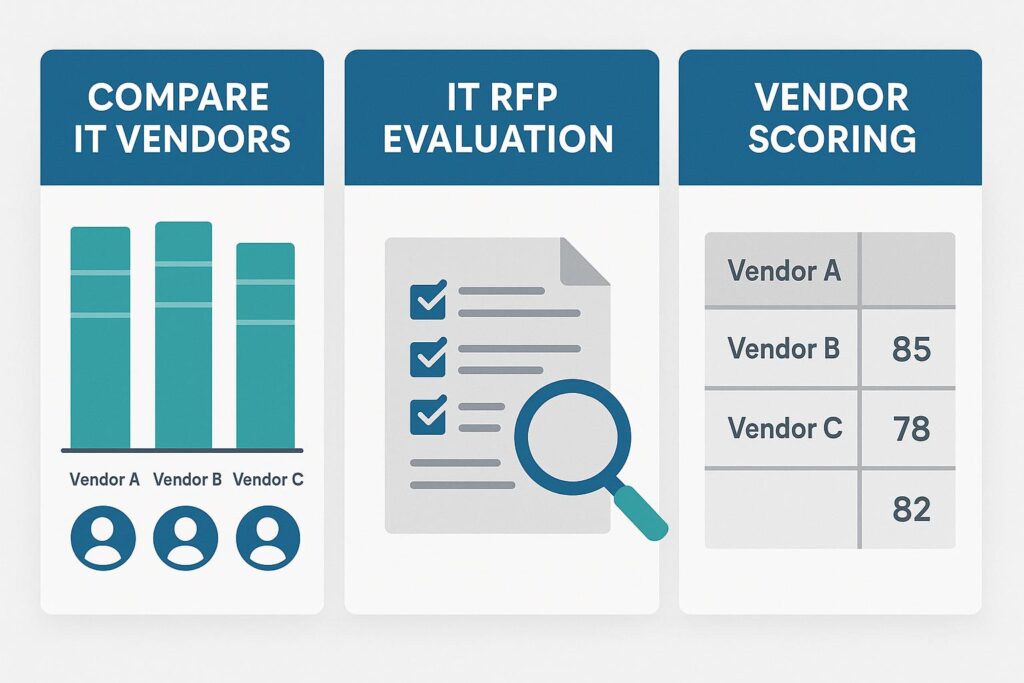
Build a Vendor Scoring Matrix
Use a simple table to score each vendor side by side. Here’s a sample:
Criteria Weight Vendor A Vendor B Vendor C Technical Fit 30% 8 7 9 Security 25% 9 8 7 Integration 20% 6 9 8 Pricing 15% 7 8 7 References 10% 8 8 9 -
Normalize and Compare Scores
- Multiply each vendor’s score by the weight for each criterion
- Sum the totals for a final, unbiased comparison
-
Document Your Process
Keep a clear record of your scoring rationale. This not only supports buy-in from stakeholders, but also helps defend your decision if questions arise.
Best Practices for Prompt Engineering in Vendor Evaluation
- Use AI tools to automate RFP scoring and data analysis (learn more about RFPs).
- Design clear, context-rich prompts to extract precise information from vendor responses.
- Standardize your scoring prompts to ensure fairness and repeatability.
For additional tips on evaluating AI-driven solutions, see our post on AI Productivity Tools for Business.
FAQ: IT Vendor Comparison and RFP Evaluation
- What is the best way to compare IT vendors during an RFP?
- Use a vendor scoring matrix with clear, weighted criteria. This ensures each vendor is evaluated objectively and consistently.
- How do I create an apples-to-apples comparison between vendors?
- Standardize your requirements and scoring system. Request responses in a consistent format and use weighted scores for direct comparison.
- What criteria should I use for IT RFP evaluation?
- Focus on technical capability, security, integration, cost, and vendor reputation. Adjust weights based on your project’s priorities.
- How can AI help with vendor scoring?
- AI tools can automate score calculations, highlight anomalies, and streamline data analysis—saving time and reducing manual errors.
- Where can I find more resources on IT RFP evaluation?
- Check out our guide to building a vendor shortlist and visit CIO’s RFP writing guide for external best practices.
Explore Next Steps with Omni Legion
Ready to streamline your IT RFP evaluation process? Discover how Omni Legion’s expertise in AI, productivity, and prompt engineering can help your team make smarter, faster vendor decisions—backed by proven frameworks and actionable insights.