
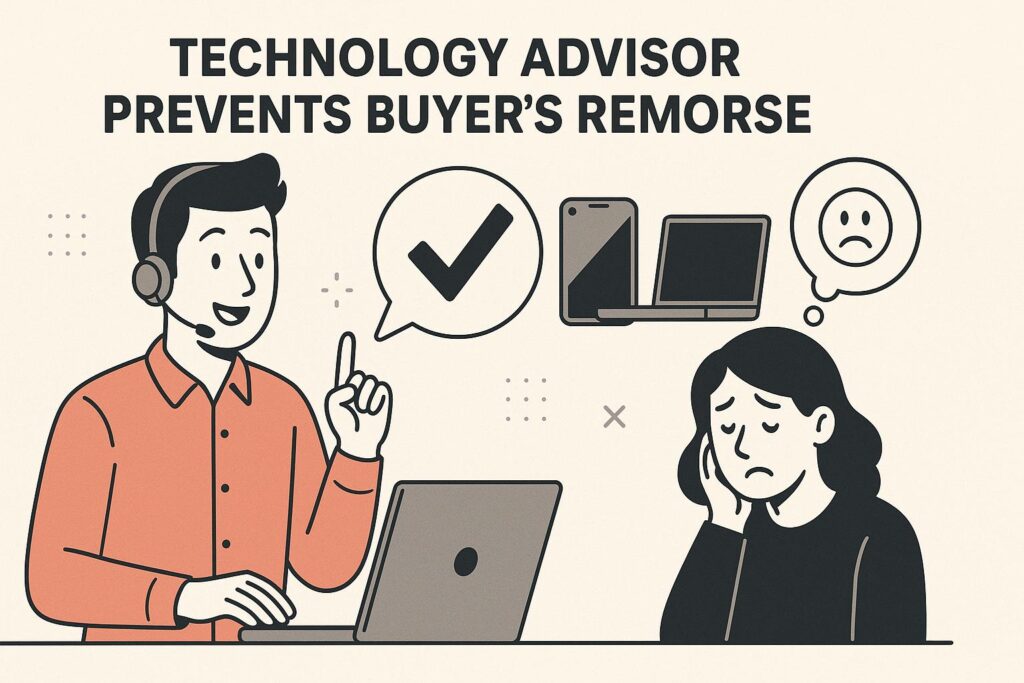
Top 7 Ways a Technology Advisor Prevents Buyer’s Remorse
Choosing new IT solutions or services is a high-stakes decision for any business. Yet, many SMBs end up second-guessing their investments—struggling with solutions that don’t fit, unexpected costs, or poor vendor support. If you’ve ever faced buyer’s remorse after a major technology purchase, you’re not alone. That’s where a trusted technology advisor can make all the difference.
Why IT Buyer’s Remorse Happens
Business owners and IT leaders often face pressure to move quickly, juggle unclear requirements, or navigate a crowded vendor landscape. The result? Costly missteps and solutions that don’t deliver as promised. An experienced technology advisor prevents buyer’s remorse by providing independent, expert guidance at every stage of the process.
7 Ways a Technology Advisor Prevents Buyer’s Remorse
-
Objective Needs Assessment
An advisor conducts a thorough review of your business goals, workflows, and pain points—identifying what you truly need, not just what vendors want to sell. -
Vendor-Neutral Recommendations
By remaining independent, technology advisors help you avoid vendor bias and select solutions that align with your unique requirements and budget. -
Clear RFP and Evaluation Frameworks
Advisors can craft detailed RFPs and scorecards, ensuring all vendors are assessed consistently. This reduces the risk of surprises and misaligned expectations. Learn more about Omni Legion’s IT strategy consulting. -
Total Cost of Ownership (TCO) Analysis
A good advisor looks beyond sticker price—factoring in licensing, integration, support, and future scalability to prevent budget overruns. -
Risk Assessment and Mitigation
Technology advisors evaluate security, compliance, and operational risks before you sign. They uncover hidden vulnerabilities and recommend safeguards. For more on cybersecurity, see Omni Legion’s cybersecurity services. -
Change Management Planning
Advisors help plan for user adoption, training, and support—key factors in project success and ROI. -
Post-Implementation Review
After deployment, an advisor measures outcomes against objectives, helping you optimize performance and address any gaps early.
Checklist: Avoiding IT Buyer’s Remorse
- Define key business and technical requirements
- Engage a neutral advisor early
- Use structured vendor evaluation tools
- Assess TCO and long-term impacts
- Plan for change management and support
FAQ: How a Technology Advisor Prevents Buyer’s Remorse
- What is a technology advisor?
- A technology advisor is an independent expert who helps businesses evaluate, select, and implement IT solutions—ensuring decisions align with business needs and reduce risk. Learn more about Omni Legion’s technology advisory services.
- How can a technology advisor help with managed services?
- Advisors clarify your requirements, vet managed service providers, and ensure contracts cover the right SLAs, security, and support—minimizing surprises.
- Why do SMBs regret IT purchases?
- Common reasons include unclear goals, vendor lock-in, hidden costs, and poor integration planning. Advisors help avoid these pitfalls with structured frameworks.
- What should I look for in a technology advisor?
- Look for independence, experience with SMB needs, a strong track record, and transparent processes. The advisor should be focused on your outcomes, not vendor incentives.
- Where can I find more resources about IT decision-making?
- Check out authoritative sites like CIO.com and NIST Cybersecurity Framework for practical guides and frameworks.
Ready to Make Confident IT Decisions?
If you want to avoid buyer’s remorse and make technology decisions with confidence, consider working with an experienced, independent advisor. Contact Omni Legion for a consultation—no hard sell, just expert guidance tailored to your business.