
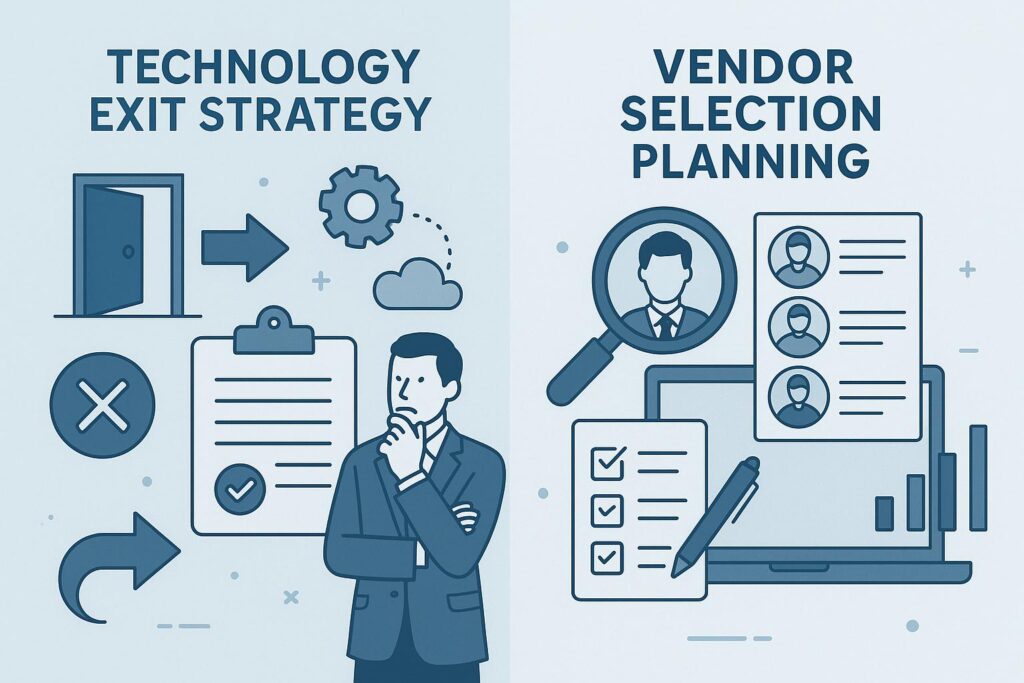
How to Build an Exit Strategy Before Choosing a Technology Vendor
Meta Description: A smart guide to planning for portability and leverage before signing with any technology provider.
Imagine this: your business is thriving with a new AI-powered SaaS platform, but a year later, you realize it’s time to move on—maybe the vendor’s roadmap shifted, prices spiked, or your needs evolved. Suddenly, you’re locked in, facing costly migrations and lost productivity. If this scenario sounds familiar, you’re not alone. Many organizations overlook a technology exit strategy during vendor selection planning, only to regret it later.
Why Every Business Needs a Technology Exit Strategy
A technology exit strategy isn’t just a “Plan B”—it’s a proactive approach to protect your data, workflows, and leverage. When evaluating AI and productivity platforms, asking the right questions early can save you headaches, costs, and lost opportunities down the road.
Key Framework: Building Portability & Leverage In
- Assess Data Portability: Does the vendor offer easy data export in standard formats (e.g., CSV, JSON)? Can you retrieve prompts, settings, and user activity logs?
- Check API Access: Are there robust APIs to automate data migration or integration with future platforms?
- Understand Contract Terms: Look for clear exit clauses, minimum commitments, and data deletion guarantees.
- Evaluate Vendor Lock-In Risks: How hard is it to replicate or move your workflows elsewhere? Are proprietary formats or models involved?
Prompt Engineering Angle: Future-Proof Your Automation
For AI and prompt engineering tools, portability is especially critical. Choose vendors that allow you to export your prompts, custom templates, and fine-tuned models. This enables you to switch tools or scale your automation without starting from scratch. Explore Omni Legion’s prompt portability insights for more best practices.
Checklist: Vendor Selection Planning with Exit in Mind
- Request data export demos before signing
- Map out migration scenarios for core assets (data, prompts, workflows)
- Negotiate for ongoing access to your assets post-contract
- Document dependencies on proprietary features or integrations
- Periodically test your exit plan with a sandbox migration
For a deeper dive into building resilient digital operations, check out Omni Legion’s AI productivity resources.
FAQ: Technology Exit Strategy & Vendor Selection Planning
- What is a technology exit strategy?
- It’s a plan for how your organization will transition away from a technology vendor without disruption, ensuring you retain control over your data and workflows.
- Why plan an exit strategy before choosing a vendor?
- Early planning prevents vendor lock-in, supports future flexibility, and can strengthen your negotiation position during onboarding.
- How can I assess a vendor’s data portability?
- Ask for documentation or demos showing how to export all your key assets (data, prompts, workflows) in open formats.
- What are common vendor lock-in red flags?
- Proprietary data formats, lack of APIs, restrictive contracts, and limited export options are all signs to watch for.
- How often should I review my exit plan?
- Review at least annually or with any major vendor update. Regular testing ensures your plan works as intended.
Ready to Future-Proof Your Tech Stack?
Building a smart technology exit strategy is just one way Omni Legion helps businesses lead in the age of AI. Connect with our experts for more guidance on vendor selection planning, prompt engineering, and productivity optimization.