
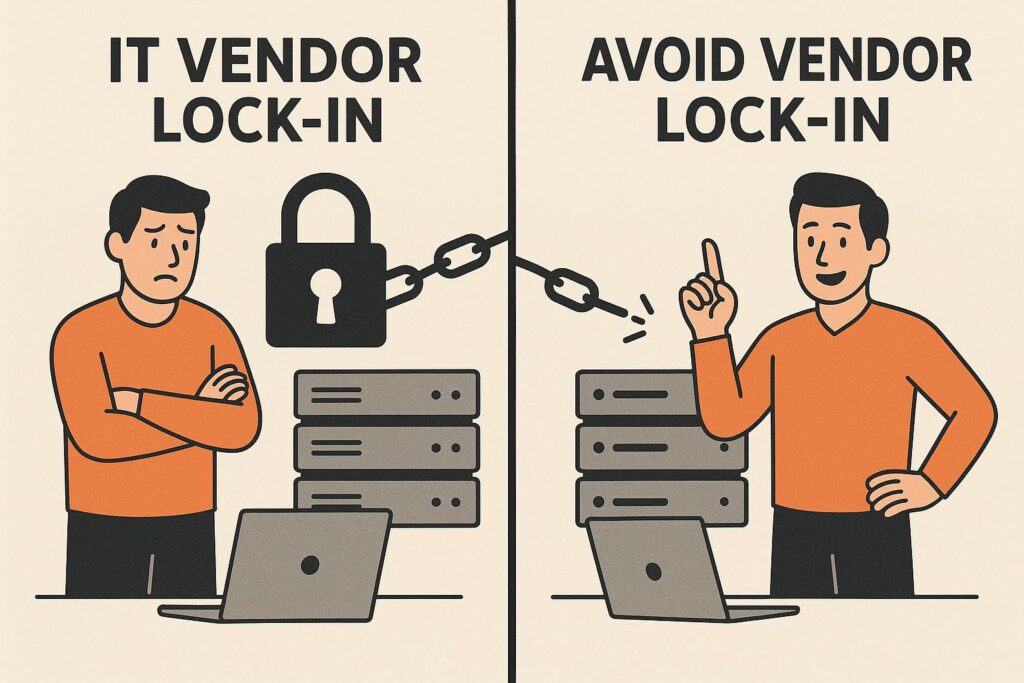
What Is IT Vendor Lock-In and How Can You Avoid It?
Ever felt boxed in by a software tool or AI platform you once loved? Many growing businesses face this productivity challenge: the more you rely on a single IT provider, the harder it can be to pivot, adapt, or upgrade as your needs evolve. This phenomenon—called IT vendor lock in—can quietly limit your flexibility and growth. Let’s demystify vendor lock-in, explore practical strategies to avoid it, and help you build smarter, more agile tech stacks.
What Is IT Vendor Lock-In?
IT vendor lock-in happens when a business becomes so dependent on a specific provider’s technology, tools, or platforms that switching to another vendor becomes prohibitively expensive or complicated. This often shows up as:
- Proprietary file formats or APIs that can’t be easily migrated
- Long-term contracts with steep termination fees
- Custom integrations that don’t translate to other platforms
- Limited access to your own data or workflows
For AI-powered teams and SaaS-based businesses, vendor lock-in can stifle innovation and slow productivity improvements. That’s why understanding—and actively avoiding—vendor lock-in is a crucial part of modern IT strategy.
How to Avoid Vendor Lock-In: Proven Frameworks and Tips
Here’s how you can keep your options open and your business nimble:
1. Prioritize Open Standards
- Choose platforms that support widely-used, open file formats and APIs.
- Ask vendors about data export and import capabilities upfront.
- Look for tools with robust third-party ecosystem support.
2. Modular Design and Integration
- Favor modular, plug-and-play SaaS tools over monolithic solutions.
- Use integration platforms (like Zapier or Make) to decouple workflows.
- Document your prompt engineering and AI workflows—so you can replicate them elsewhere if needed.
3. Negotiate Flexible Contracts
- Push for shorter contract terms or termination clauses that minimize penalties.
- Request a clear, written exit and data migration plan before signing.
4. Regularly Review Your Stack
- Conduct annual audits of your IT vendors and dependencies.
- Stay informed about new interoperable tools in the AI and productivity space. See our guide to top AI productivity tools.
By proactively applying these frameworks, you’ll gain leverage, flexibility, and peace of mind. For more on building resilient tech ecosystems, explore our prompt engineering best practices.
FAQ: IT Vendor Lock-In
- What are the main risks of IT vendor lock in?
- Risks include higher costs, limited scalability, data migration challenges, and restricted innovation due to dependence on a single provider.
- How do open standards help avoid vendor lock-in?
- Open standards allow you to move data and workflows between tools more easily, reducing reliance on proprietary systems. Learn more about open standards.
- Can AI and SaaS platforms increase vendor lock-in?
- Yes, especially if they use closed APIs or proprietary models. Always check for data portability and third-party integration options before adopting new platforms.
- What questions should I ask a vendor to avoid lock-in?
- Ask about contract flexibility, data export options, compatibility with other tools, and their process for helping clients migrate away if needed.
- How often should businesses review their IT vendors?
- At least annually, or whenever your business needs change. Regular audits help spot potential lock-in risks early.
Stay Flexible with Omni Legion
Building a future-proof tech stack doesn’t have to be overwhelming. At Omni Legion, we help businesses navigate AI, SaaS, and prompt engineering with confidence. Contact us to explore how we can support your IT decisions—so you stay agile, productive, and in control.