
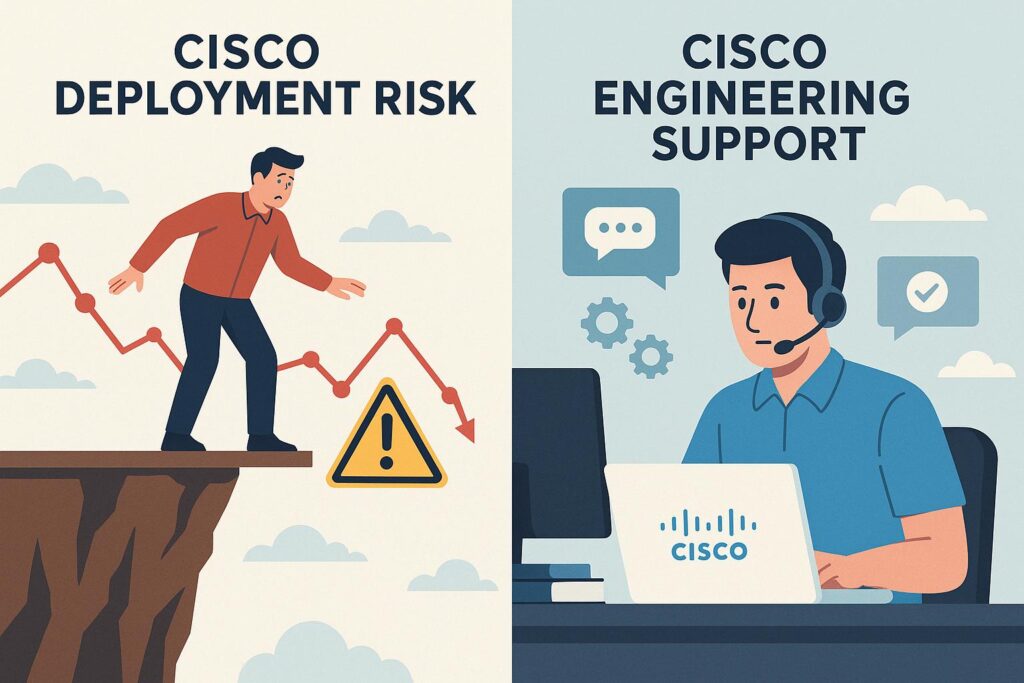
How Cisco Expertise Helps Reduce Deployment Risk
In today’s fast-moving tech landscape, deploying new infrastructure can feel like navigating a maze—especially when Cisco technologies are involved. AI-powered solutions, cloud integrations, and network upgrades promise big gains in productivity, but missteps during planning or deployment can quickly derail progress. For many IT leaders and business owners, the challenge is clear: how do you minimize Cisco deployment risk and ensure a smooth, secure rollout?
Why Cisco Deployment Risk Is a Real Concern
Deploying Cisco solutions—whether for networking, security, or collaboration—often involves complex configurations, multi-vendor environments, and tight timelines. Common risks include:
- Configuration errors leading to downtime or vulnerabilities
- Poor integration with existing systems
- Missed security best practices
- Delays from unclear requirements or lack of documentation
These issues can result in lost productivity, frustrated teams, and even revenue-impacting outages. That’s why Cisco engineering support is more than a nice-to-have—it’s a business necessity.
How Cisco Experts Minimize Deployment Risks
Experienced Cisco professionals bring proven frameworks and deep technical know-how to every stage of the process. Here’s how leveraging their expertise helps:
1. Strategic Planning and Assessment
- Requirements Gathering: Experts use structured prompts and checklists to uncover hidden needs and dependencies.
- Risk Mapping: Early identification of potential bottlenecks or failure points saves time during migration.
2. Smart Prompt Engineering for AI-Driven Deployments
- Effective prompts are used to automate repetitive deployment tasks, reducing manual errors.
- Engineers tailor AI tools to your environment, ensuring reliable outcomes and faster rollouts.
3. Robust Migration and Testing Frameworks
- Phased migration plans minimize disruption and allow for quick course correction.
- Pre-deployment testing frameworks catch issues before go-live, using both automated and manual validation.
4. Continuous Monitoring and Optimization
- Post-deployment, experts use analytics and monitoring tools to detect anomalies early.
- Proactive tuning keeps systems performing at their best, supporting ongoing productivity improvements.
For more on strategic deployment planning, see our AI Adoption Roadmap and Network Optimization Services.
FAQ: Cisco Deployment Risk & Engineering Support
- What are the main risks during a Cisco deployment?
- Risks include system downtime, configuration errors, integration failures, and overlooked security gaps. Proper planning and expert oversight help mitigate these challenges.
- How does Cisco engineering support improve deployment success?
- Certified professionals apply proven frameworks, automate tasks with AI, and rigorously test configurations, leading to smoother deployments and fewer surprises.
- Can prompt engineering speed up Cisco deployments?
- Yes. By designing precise prompts for AI automation, teams can reduce manual work, avoid common mistakes, and accelerate deployment timelines.
- What frameworks do Cisco experts use for deployment?
- Experts rely on phased migration plans, comprehensive testing protocols, and real-time monitoring strategies to minimize risk and maximize uptime.
- Where can I learn more about reducing IT deployment risk?
- Resources like Cisco’s Deployment Services and Gartner’s IT research offer in-depth guidance.
Take the Next Step with Omni Legion
Whether you’re planning your next Cisco deployment or looking to optimize current systems, Omni Legion’s team combines AI expertise with proven engineering frameworks to help you move faster and smarter—while reducing risk at every stage. Contact us or explore our resources to see how we can support your goals.