
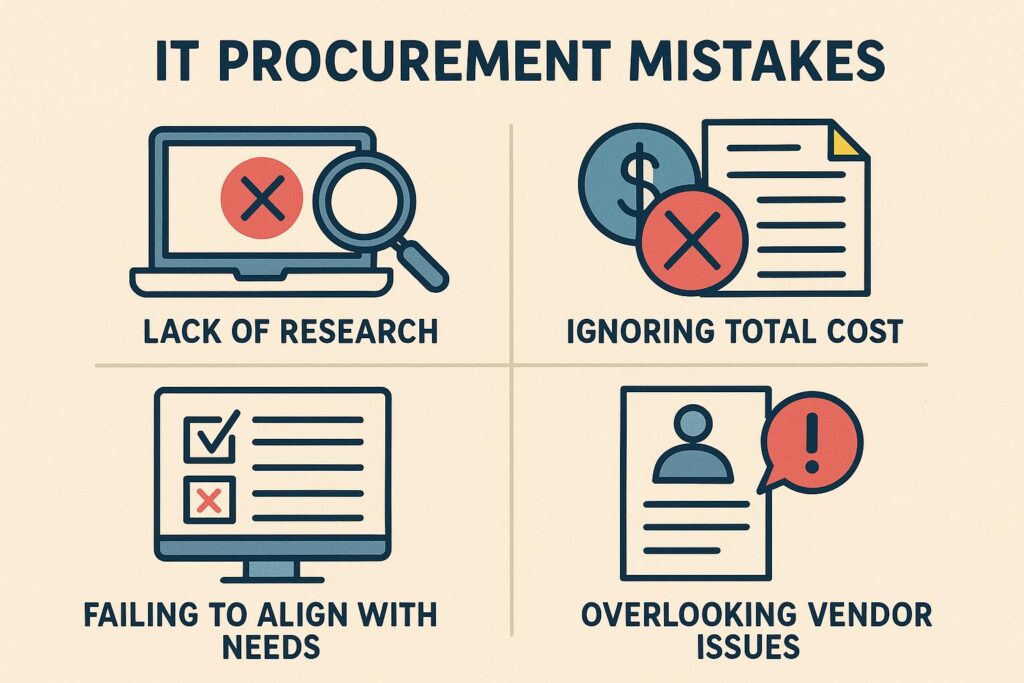
The Biggest Mistakes Companies Make in IT Procurement
In today’s fast-moving AI-powered world, businesses rely on technology more than ever. Yet, even the most innovative teams can get tripped up by common IT procurement mistakes. Whether you’re buying software, onboarding a new SaaS tool, or upgrading your infrastructure, errors in the procurement process can waste both time and budget, and stall your productivity goals.
At Omni Legion, we see many companies—large and small—struggle with the same technology buying errors. Let’s unpack these common pitfalls and share practical frameworks to help your organization make smarter procurement decisions, especially as AI and prompt engineering become central to business strategy.
Top IT Procurement Mistakes (and How to Avoid Them)
1. Skipping Stakeholder Input
- Mistake: Choosing tools without consulting end-users or key departments.
- How to Avoid: Create a cross-functional team for requirements gathering. Use structured prompts to uncover needs (e.g., “What tasks do you wish were automated?” or “Which processes are bottlenecks for your team?”).
2. Focusing on Features, Not Outcomes
- Mistake: Getting dazzled by features instead of solving business problems.
- How to Avoid: Start with business goals, not product specs. Map each tool’s core function to a specific outcome—like reducing manual data entry or improving response times.
3. Underestimating Integration Complexity
- Mistake: Assuming new solutions will “just work” with your current stack.
- How to Avoid: Audit existing systems and list required integrations. Use prompt frameworks to vet vendors (e.g., “Describe how your platform integrates with our existing CRM and security protocols”).
4. Neglecting Vendor Support and SLAs
- Mistake: Overlooking post-purchase support and clear service level agreements.
- How to Avoid: Review vendor support policies and escalation paths. Ask for sample SLAs and customer success stories—Gartner offers helpful SLA guidance.
5. Failing to Plan for Adoption and Training
- Mistake: Rolling out new tools without an adoption plan.
- How to Avoid: Develop a change management plan that includes training, feedback loops, and clear documentation. Leverage AI-powered onboarding tools where possible.
Framework: Smarter IT Procurement in 5 Steps
- Define Objectives: Clarify the problem and desired outcomes.
- Engage Stakeholders: Use prompts to gather requirements across teams.
- Evaluate Solutions: Score each option on outcomes, integration, and support.
- Test and Pilot: Run small pilots to surface hidden issues.
- Plan Implementation: Include training and feedback mechanisms.
For more on prompt-driven productivity and smart AI adoption, explore our AI productivity tips and prompt engineering best practices guides.
FAQ: IT Procurement Mistakes
What are the most common IT procurement mistakes?
The most common IT procurement mistakes include skipping stakeholder input, focusing on features over outcomes, underestimating integration needs, and lacking a clear adoption plan.
How can businesses avoid technology buying errors?
Businesses can avoid errors by defining objectives, engaging stakeholders early, evaluating vendor support, and planning for adoption and integration.
Why is prompt engineering important in IT procurement?
Prompt engineering helps teams clarify requirements, vet vendors efficiently, and ensure technology aligns with business goals—especially for AI and SaaS tools.
What should I look for in a vendor SLA?
Look for clear uptime guarantees, support response times, escalation processes, and customer references. Third-party resources like CIO.com’s SLA tips can help.
How does Omni Legion support smarter IT procurement?
Omni Legion provides expert guidance, prompt frameworks, and proven best practices to help companies avoid procurement mistakes and maximize technology ROI.
Ready to Level Up Your IT Procurement?
If you’re looking to transform your IT buying process with AI-driven insights and actionable frameworks, connect with the Omni Legion team today. Discover how our services can help you avoid costly mistakes and achieve your productivity goals.